
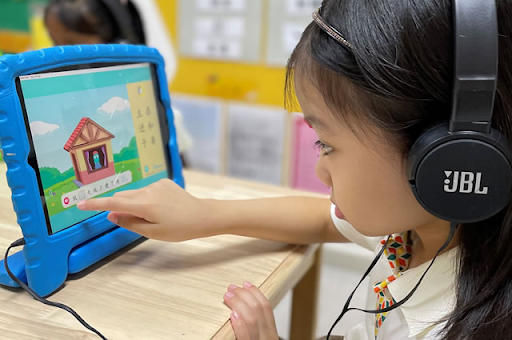
Artificial intelligence (AI) is shaping the world children will grow up in. It is influencing how people work, communicate, solve problems and create, which is why many parents are thinking more seriously about what this means for early education. The question is no longer whether children will encounter AI in the future. The real question is how schools should introduce it in ways that are thoughtful, age-appropriate and educationally sound.
The Cambridge Pre-school approach begins with a clear priority, children need the strongest possible foundation for life and learning. In the early years, that foundation is built through play, conversation, relationships, movement, imagination and hands-on discovery. These experiences affect how children think, communicate, build confidence and engage with the world around them. They also prepare children for a future in which AI will increasingly be part of daily life. Our approach to introducing AI to pre-schoolers is rooted in this understanding. It is guided by child development, strong teaching, and a commitment to meaningful learning.
Why Our Approach Starts with Childhood
The pre-school years influence how children learn, relate, and grow. They are the years in which children begin to understand themselves, build trust in others, express ideas, manage emotions, and develop the confidence to participate in the world. These early capacities influence every stage of later learning.
Introducing AI within our pre-school begins with protecting and strengthening what matters most in childhood. Children need rich human interaction, purposeful routines, active exploration, and opportunities to think, speak, question, and discover. They need experiences that help them become secure, curious, expressive, and independent.
This is why our educational focus remains on the foundations that matter most: Self-Help Skills, Academic Skills, People Skills, and Future Skills. These are the capabilities that prepare children well for the years ahead. A child who can listen, communicate clearly, cooperate with others, stay engaged through challenges and take responsibility in small ways is already building qualities that will matter deeply in a changing world.
How AI Supports Learning at Cambridge
Introduced with a clear educational purpose, AI supports teaching and helps learning become more responsive to each child’s needs, pace and progress. This gives our teachers stronger insight into how children are developing and where support can be most effective.
Every child learns differently. Some children need more repetition before a skill feels secure. Some benefit from reassurance and careful reinforcement. Others are ready for greater stretch and challenge. Our AI-informed tools help teachers identify these patterns more clearly and respond with greater precision. This makes support more timely, more personalized and more meaningful for the child.
This approach reflects our approach to early education, children thrive when they feel seen and understood. Learning becomes more effective when it meets the child where they are and helps them move forward. AI supports that process by helping our teachers make informed decisions that strengthen each child’s learning journey.
Why the Teacher Remains Central
The teacher remains at the heart of every meaningful learning experience in pre-school. Young children learn through connection, trust, encouragement and responsive guidance. They need adults who can observe carefully, interpret sensitively, and shape learning in ways that feel safe, engaging, and developmentally appropriate.
For us, AI contributes useful insight and the teacher gives that insight educational value. Professional judgment remains essential in deciding how support is offered, how learning is extended, and how each child is guided through challenge and growth. The relationship between teacher and child continues to hold the deepest value because it is through that relationship that confidence, motivation and a love of learning begin to grow.
This matters greatly when introducing ideas connected to the future. Young children benefit from thoughtful adults who can make complex ideas feel meaningful within the context of everyday learning. And it is this emphasis that gives our students the emotional security and confidence they need to engage with new experiences openly and positively.
How AI Connects with Language and Literacy
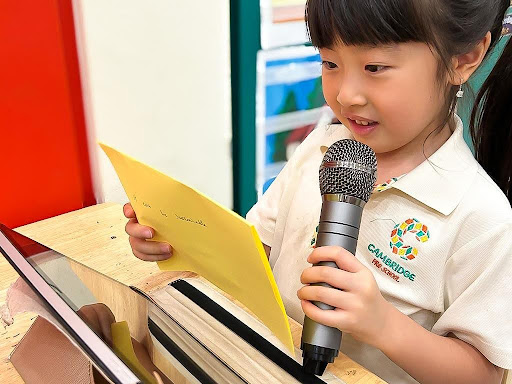
One of the clearest ways this approach comes to life is in language and literacy. With us, literacy is about developing voice, expression, confidence and the ability to communicate with meaning. Children need opportunities to speak, listen, describe, imagine, question, and connect ideas in ways that feel engaging and purposeful.
Through our English Language and Literacy curriculum, including the Phonics and Reading Programme and Literature Alive, children build essential skills through rich experiences with stories, poetry, vocabulary, authors and creative expression. These experiences help children understand language as something powerful and enjoyable. They learn how words carry meaning, how ideas can be expressed clearly and how communication connects them to others.
AI amplifies these efforts by helping our teachers create more responsive literacy experiences and by opening space for collaborative discussion, composition and idea-building. Children deepen literacy when they think about language, make choices and express themselves with growing confidence.
The same principles guide our Chinese Language and Literacy curriculum. Through the Chinese Reading Programme, Chinese Cultural Appreciation Programme, and Hanyu Pinyin Programme, children develop listening, speaking, reading, and writing while also building a deeper connection to the language and its cultural context. AI-enabled tools support our educators in monitoring progress and tailoring support in ways that help children feel capable, included and ready to participate.
How Future Skills Stay Hands-On
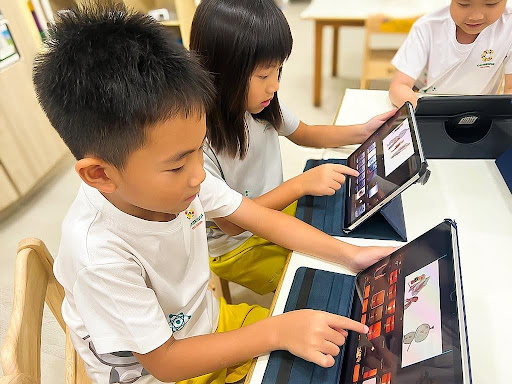
Future readiness begins with active learning. Children develop capability by exploring, building, testing, questioning and discovering. These experiences define how they approach problems, express curiosity and think with flexibility and purpose.
That is why we place strong emphasis on hands-on learning through our award-winning iSTEAM curriculum. Grounded in Innovation, Science, Technology, Engineering, Arts and Mathematics, iSTEAM invites children to engage directly with ideas in concrete and meaningful ways. From sensory exploration in infancy to early coding concepts, sustainability, machines, weather and inquiry-based projects in the later years, children learn by participating actively in the world around them.
This gives future-focused learning real depth. Children investigate, experiment and make sense of ideas through experience. They build the habits of mind that matter for the future, including curiosity, persistence, creativity, communication and problem-solving.
A Thoughtful Way Forward
Introducing AI to pre-schoolers means preparing children for the future through strong foundations, careful teaching and purposeful innovation. It means using AI to deepen understanding, personalize support and enrich learning in ways that help children grow with confidence. It means keeping childhood rich with discovery, conversation, creativity and human connection.
Our approach is guided by a clear belief: the future belongs to children who know how to think, communicate, adapt, and engage meaningfully with the world around them. These qualities begin in the early years. At Cambridge Pre-school, we nurture them with care, insight and a strong educational philosophy that places every child at the centre of learning.
Book a school tour today and discover how we introduce AI through thoughtful teaching, strong foundations, and a future-ready approach that prepares every child to thrive in this era.