A child’s first school experience, whether it’s the separation from caregivers, the academic adjustments, or the emerging friendships, defines how they go on to handle routine, respond to guidance, build trust outside the home, or, even how confidently they move through the world around them.
It’s precisely why this decision feels so significant for parents, choosing a pre-school means choosing the foundation that will shape your child’s development long after those early years.
For many families, private pre-school stands out for the kind of early learning experience it can provide during these formative years: more academic exposure, personalised support, diverse enrichment.
But is that all they have to offer? In this article, we explore 7 reasons to consider a private pre-school in Singapore, some widely known, others often overlooked.
1. A Better Fit for Your Child
One of the strongest reasons to consider a private pre-school is the ability to choose a setting that truly fits your child. Especially since the right fit plays a central role in a child’s school experience. It shapes how comfortably they separate from home, how smoothly they adapt to routine, and how ready they are to take part in class.
Children do not all learn or respond in the same way. Some need a calm and predictable rhythm. Some thrive in a more expressive and interactive environment. Some need more support in building confidence, while others are ready for greater independence. A private pre-school often gives parents more room to look for that alignment instead of simply accepting what is available.
That alignment matters. A school that matches a child’s temperament and developmental stage often helps them engage more naturally, form trust more quickly, and build a healthier first relationship with learning.
2. A Stronger Early Foundation
The pre-school years are where many of the foundations for later success are built. This is where children begin developing language, attention, self-regulation, communication, and the ability to function in a shared environment. These early skills affect how they settle into school and respond to learning.
Private pre-schools tend to have smaller class sizes and more tailored environments that allow teachers to provide more personalised support. Whether a child is, for example, struggling with speech and language delays, gross motor difficulties, or behavioural challenges, private institutions, by virtue of their smaller teacher-to-student ratios, are better equipped to not only observe but also adapt teaching methods to fit a child’s needs.
These early capabilities influence how a child experiences every next stage of education. A child with strong foundational habits tends to move into future classrooms with more confidence, more readiness, and less dependence on constant adult direction. That is why this stage deserves real thought.
By addressing each child’s developmental needs, they acquire strong foundation habits that allow them to move into future classrooms with more confidence, more readiness and less dependence on constant adult direction.
3. More Intentional Learning
Public pre-schools in Singapore are not without structure or rigour, after all learning outcomes and approaches are grounded in the Nurturing Early Learners (NEL) Framework, which provides a solid baseline. The limitation, however, is that frontier innovations in early education can take years to filter through as a result of bureaucratic hurdles.
Private pre-schools, on the other hand, have the flexibility to adopt new pedagogical approaches that align with their educational identity and respond more quickly to emerging research.
At Cambridge Pre-school, for example, our pedagogy is informed by ongoing research in neuroscience and educational practice developed by our parent company, Ednovation, which operates over 60 pre-schools across China, Singapore, and the rest of ASEAN. In practical terms, this means approaches like play-based enquiry and early executive function development are embedded into daily learning and not treated as supplementary.
This means that, in addition to adhering to the NEL Framework, as is required of all licensed pre-schools, we are able to bridge the gap between the traditional curriculum and future-ready skills such as AI literacy or certain soft skills that may not always be prioritised in standard frameworks.
4. Independence that Starts Early
Independence is one of the most valuable things a child can begin developing in pre-school. It starts in ordinary moments: managing belongings, following routines, carrying out simple tasks, and learning to do age-appropriate things without waiting for constant help.
The challenge in larger, more standardised settings is that the pace of the group often takes precedence over the pace of the child. When a teacher is managing a class of 20 or more, transitions tend to be directed rather than practised. Children are moved through routines collectively, which leaves little room for each child to take ownership of small tasks themselves.
Private pre-schools, with their smaller class sizes and more flexible daily structures, are better positioned to build independence into the texture of the day. Children have more room to manage routines at their own pace, make simple choices, and take responsibility for small tasks in ways that feel natural and consistent rather than hurried.
This belief is reflected in our focus on Self-Help Skills. The philosophy is straightforward: independence grows through practice, not instruction. When children are regularly guided to take responsibility for manageable parts of their day, they begin building a sense of capability that feels earned, and that tends to carry forward into how they approach new challenges.
5. Social Skills with Real Purpose
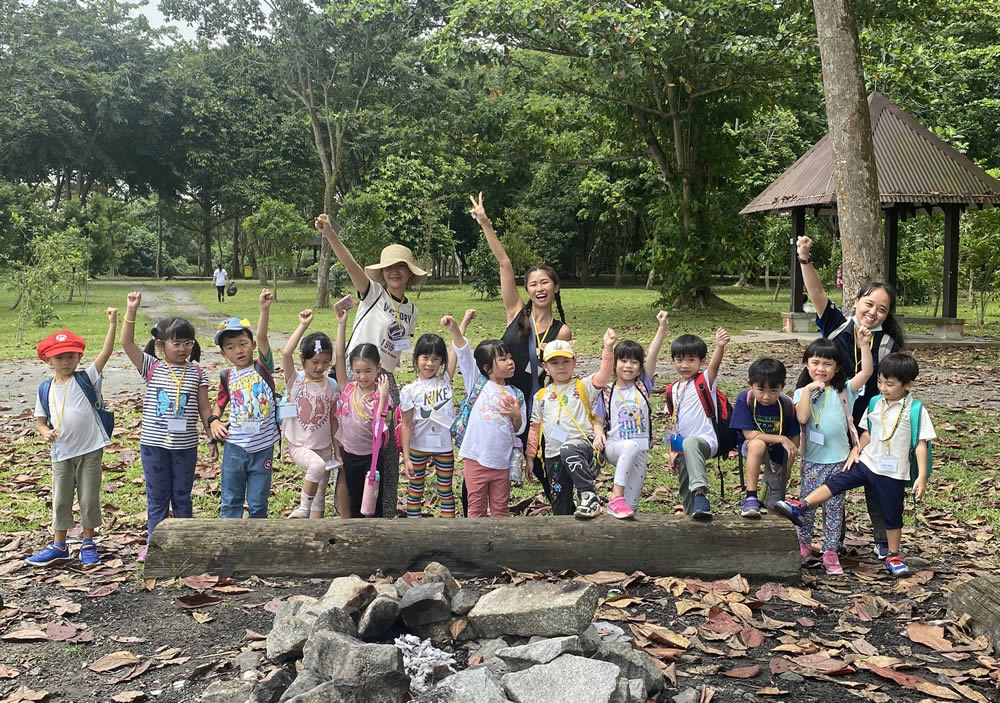
Pre-school is one of the first places where children learn how to be part of a wider community. They begin understanding how to share space, take turns, listen to others, communicate needs, and respond appropriately in group settings. These social experiences shape a large part of their daily school life.
In a large classroom, social development can happen somewhat incidentally. Children interact, but those interactions are harder for teachers to observe closely or guide meaningfully when attention is spread across many children at once. Social difficulties (a child who struggles to communicate needs, who withdraws, or who has difficulty with turn-taking) can go unaddressed simply because there isn’t enough capacity to notice and respond.
Smaller class sizes in private pre-schools create a more connected social environment, where teachers can observe peer dynamics more closely and step in with intention. Children also tend to know one another better, which builds the familiarity needed for more meaningful interaction, rather than simply coexisting in a shared space.
Within the Cambridge Pre-school curriculum, we connect this area of development to People Skills, and that framing is deliberate. Social growth in the early years is about developing self-awareness, respect, communication, and the ability to function confidently within a group. When teachers have the capacity to guide those skills with genuine attention, children tend to settle better, express themselves more clearly, and participate more comfortably in class.
6. A Clear Educational Philosophy
Many parents are drawn to private pre-schools because they want a school with a clearer philosophy behind what it does, one they can understand, evaluate, and choose based on what matters to them.
In more standardised settings, this is harder to find. Government-operated and heavily subsidised pre-schools operate within defined frameworks and centralised guidelines, which tend to produce a degree of uniformity across schools. That consistency has value, but it also means there is less room for a school to develop a genuinely distinctive identity or a coherent, school-wide approach to child development that goes beyond the prescribed curriculum.
Private pre-schools have greater latitude to build and articulate their own philosophy, one that informs not just what is taught, but how teachers guide children, how classrooms are structured, and what kind of learning culture the school deliberately cultivates. For many parents, that clarity matters. It gives them a basis for making a genuine choice, rather than simply accepting what is nearby or available.
For example, the Cambridge Pre-school philosophy shapes everything from daily routines to teacher development. Each part of the day is structured around what young children need to feel secure, engaged, and ready to grow, and that consistency, from philosophy through to practice, is something parents can see and trust.
7. An Environment that Leaves a Lasting Mark
Children absorb the environment around them every day. They notice whether a space feels calm and inviting, whether routines are familiar, and whether adults are warm, attentive, and consistent. These early experiences build a child’s sense of comfort in school and influence how they begin to engage with learning.
In many public or budget-constrained settings, the environment is functional rather than intentional. Spaces are designed to accommodate large numbers of children safely, which is a reasonable priority, but it often comes at the cost of atmosphere, specificity, and the kind of carefully considered detail that shapes how a young child actually experiences the space day to day.
Private pre-schools can invest more deliberately in the learning environment, not just in physical design, but in the emotional tone of the classroom, the consistency of routines, and the degree to which every element of the day is calibrated to the developmental needs of young children. That investment reflects a choice: to treat the environment itself as part of the curriculum.
That can leave a lasting mark. When a child spends their early years in a setting that feels thoughtful, reassuring, and engaging, those first impressions of school often stay with them, shaping their sense of belonging, their comfort in new environments, and their attitude towards learning over time.
Final Thoughts
Choosing a pre-school means choosing the environment in which your child will begin learning how to communicate, relate to others, manage routines, and engage with learning itself.
That is where a private pre-school can offer real value. With smaller classes, more refined programmes, and greater flexibility to respond to children’s developmental needs, it can provide a start that feels more intentional, more supportive, and more effective. The result is often a child who is more settled, more independent, and better prepared for the years ahead.
At Cambridge Pre-school, that strong start is supported through our thoughtfully designed approach to early education, helping children develop a sense of capability and curiosity to thrive beyond the classroom. Book a school tour with us today and see how the right beginning can make all the difference.