Chapter 3
My Story Continues
I was born and educated in Hong Kong. After secondary 3, my family immigrated to New York. I enroled in a neighbourhood high school and was placed in the 10th grade. The school year had already started one month prior. On my first day of school, there was a quiz in maths class. I scored 100 on the quiz and the maths teacher took me to the principal’s office. They spoke, but I had no idea what they were talking about as I had attended a Chinese school in Hong Kong and my verbal English was non-existent! The next thing I knew, I was promoted to the 11th grade even though I did not speak a word of English! I could not even complain.
Even though I had regular English classes in my Hong Kong school, it did not help my verbal English. I really had to struggle and learn English with a great deal of effort.
In Hong Kong, my language in school and with friends was Cantonese. I refused to speak Mandarin at home even though my grandparents spoke it. When I was in college, I was forced to speak Mandarin as there were many children from Taiwan at that time. Surprisingly, I started speaking Mandarin with no difficulty!
Today, you can still detect my Hong Kong accent in my spoken English at times. However, you will be hard-pressed to detect any Hong Kong accent in my Mandarin.
Because of my involvement in early childhood education over the past 30 years, I am now able to explain my contrasting experience in speaking English vs Mandarin.
Our brain is made up of about 86 billion neurons. These neurons are not very connected when we are born. As we learn, some of the neurons connect to form networks. These networks create memories and help us with skills such as walking, using chopsticks, understanding, and speaking languages. Our brain consumes a lot of energy. Even though the brain is about 2% of our body weight, it consumes 20% of our energy. To conserve energy (our brain only has 20 watts to use; most lightbulbs are 100 watts), our brain works on the principle of “use it or lose it”. Any neural network that is not used will eventually be pruned away. This is called synaptic pruning.
For example, babies are born with the ability to hear any sounds of any language in the world. However, as time goes on, the neural pathways for the sounds that the child has not heard in her native language will be pruned away. Thereafter, she would not be able to hear that sound. The Japanese language does not have the “l” sound. Therefore Japanese adults cannot hear the “l” sound. Because of this, many Japanese say “ratter” instead of “letter” as they substitute the closest sound that they can hear in their language. This is why adult learners of a foreign language will always have an accent. This is synaptic pruning at work.
Synaptic pruning happens very quickly between ages of 2 and 10. During this time, about 50 percent of the extra synapses are eliminated (see figure).
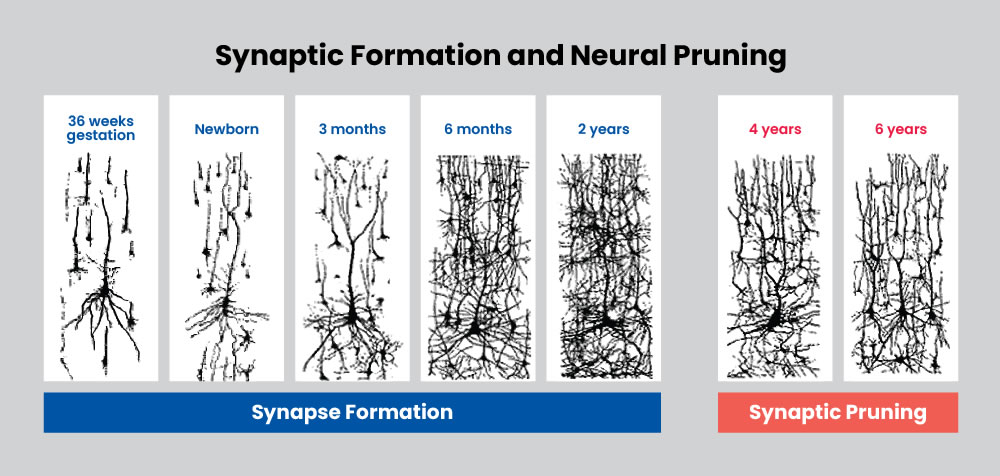
During this time, those connections that are not used are removed, allowing children’s brains to be more efficient in utilising the stronger connections that remain. Pruning useless neural pathways helps children access the needed pathways more efficiently.
This is why my English has a Cantonese accent because I was not exposed sufficiently to spoken English early on. Yet, I have no Cantonese accent in my Mandarin as I was exposed to Mandarin daily at home even though I refused to speak it.
Because of synaptic pruning, the brain has sensitivity periods, not just for languages but for many skills.
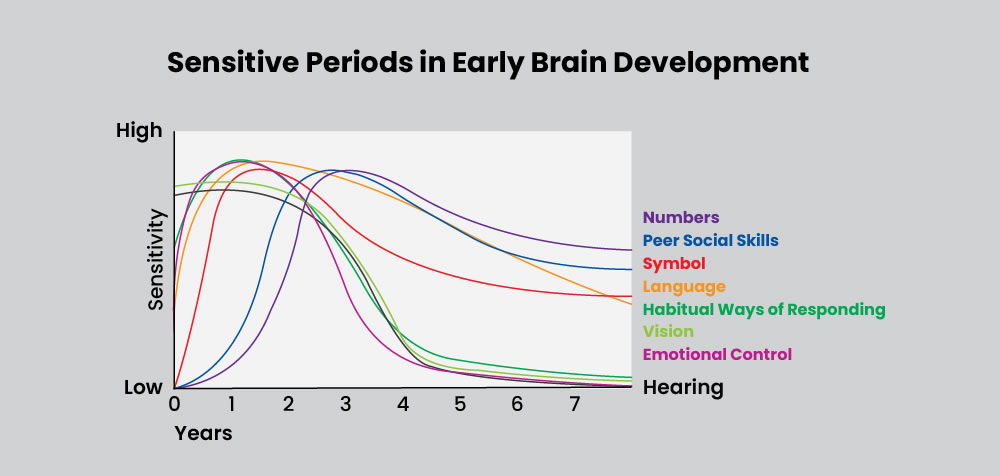
Credit: Graph developed by Council for Early Child Development (ref: Nash, 1997; Early Years Study, 1999; Shonkoff, 2000.)
Because of what happened in my life , I strongly believe in exposing children to a wide variety of experiences earlier to take full advantage of how the brain develops before synaptic pruning sets in to limit their potential. In Chapter 3, I will further explain how an early start is implemented at Cambridge, not just for language learning but for talent discovery and development.
Because I am truly bilingual and bi-cultural, I can do business in China. In fact, we have more pre-schools with more children in China than in Singapore. Personally, I have benefited from knowing my mother tongue beyond just academic success.
Mother Tongue
One of the biggest worries of parents is that children know their mother tongue. As the name suggests, the mother tongue should come naturally if it is spoken at home.
Young children can pick up any language of the world if they are provided with enough exposure to a language. Unfortunately, in Singapore, more families are speaking English at home and children lack the mother tongue environment to master Chinese. Because of synaptic pruning, once children miss learning their mother tongue during the pre-school period, no amount of study later can make up for it.
This is something we can avoid by providing a Chinese immersion environment at our Cambridge Pre-school. We have seen so many children from English-speaking homes picking up Mandarin effortlessly, saving themselves and their parents years of anxiety, tuition fees, and migration considerations later.
Besides verbal communication, we also have a very strong programme to help children master Chinese characters.
Chinese Rapid Word Recognition (CRWR)
Unlike English (a phonetic language), Chinese is a pictorial language. A new and effective method of rapid word recognition is to introduce Chinese words by families of related shapes and roots instead of teaching discrete words one at a time. Children learn a group of words, which is further enhanced with “rhymes and stories”. Each family of words is knit together into a rhyming short story, which facilitates both the speed and retention of learning. The stories are then animated to make learning more fun and the meanings even clearer.
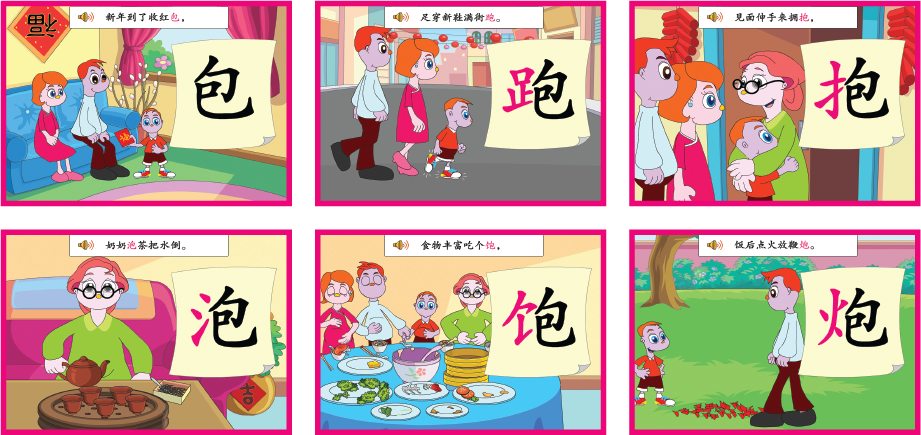
This programme is also designed based on Multiple Intelligences (MI) principles (see MI section in Chapter 3). Children with different MI profiles may prefer to sing and dance to these rhymes. Our CRWR programme is so effective that more than 10,000 children in our China pre-schools use it to recognise Chinese characters.
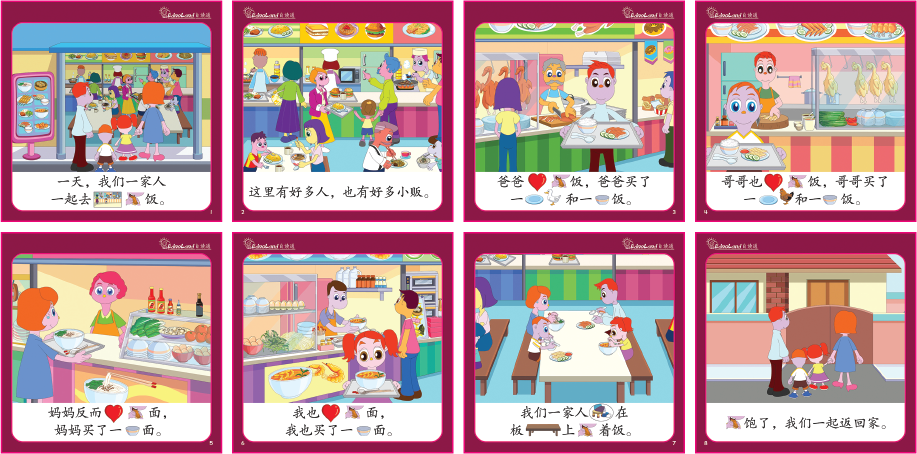
Our CRWR programme is accompanied by our Chinese Step Readers, which is a series of 36 sequenced books that help children apply their newly learn t word recognition skills to achieve independent reading.
AI Chinese
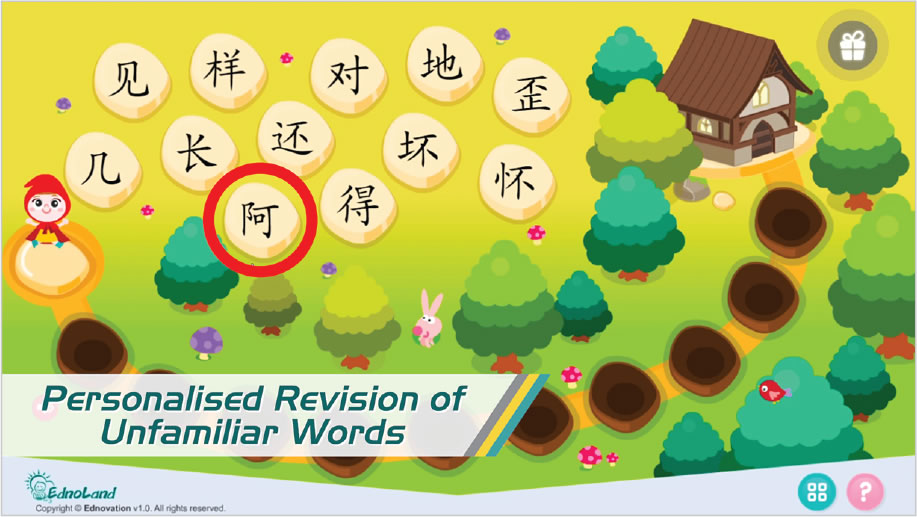
Our CRWR programme is very effective in helping children recognise Chinese characters. However, recognising a word learnt today does not mean a child will remember it later. How do we enhance long-term memory retention? This is where our AI Chinese complements our CRWR programme. AI Chinese effectively tracks the words that each child needs to study, as illustrated by the graph below.

AI Chinese will periodically and systematically present these specific words to the specific child to review. This personalised system means each child will have his or her unique list of unfamiliar words to master through fun games.
Through repetition, over time, these words will be moved into a child’s long-term memory. These reports show children improve their Chinese word recognition tremendously even at four years old. The report on the left is dated 7 June showing this child knows 12 words with a greater than 50% score. The report on the right is dated five months later showing the child now knows 106 words with a greater than 50% score.
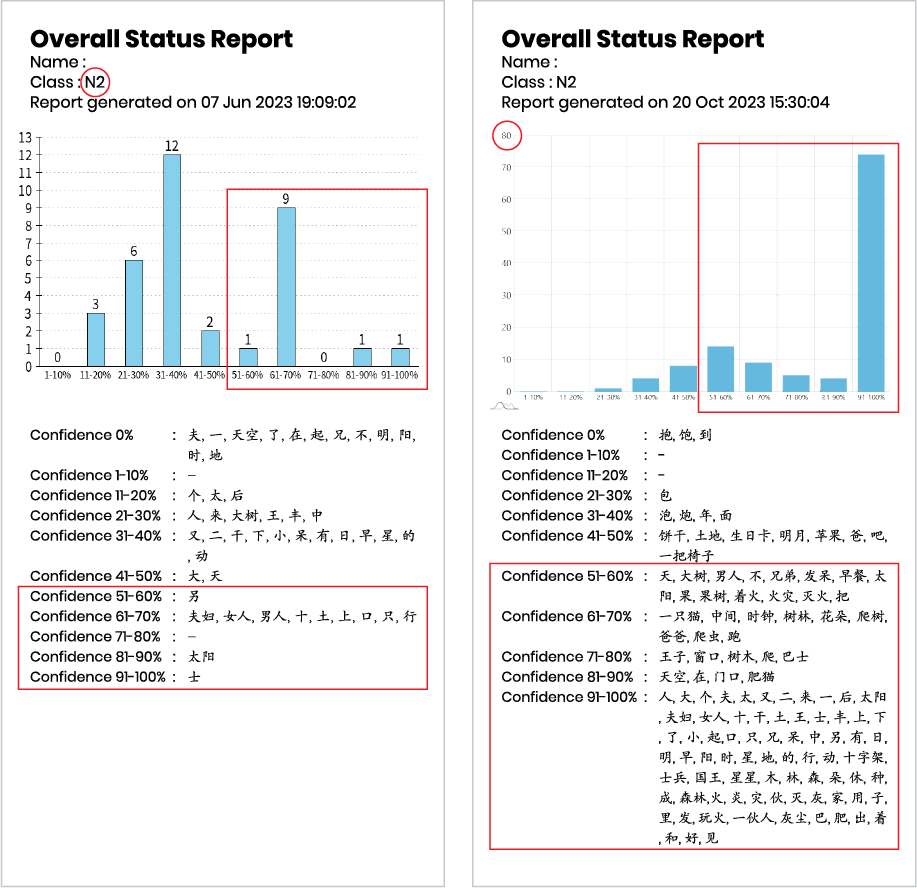
Progress of a non-Chinese K2 (6 years old) child over 5 months.
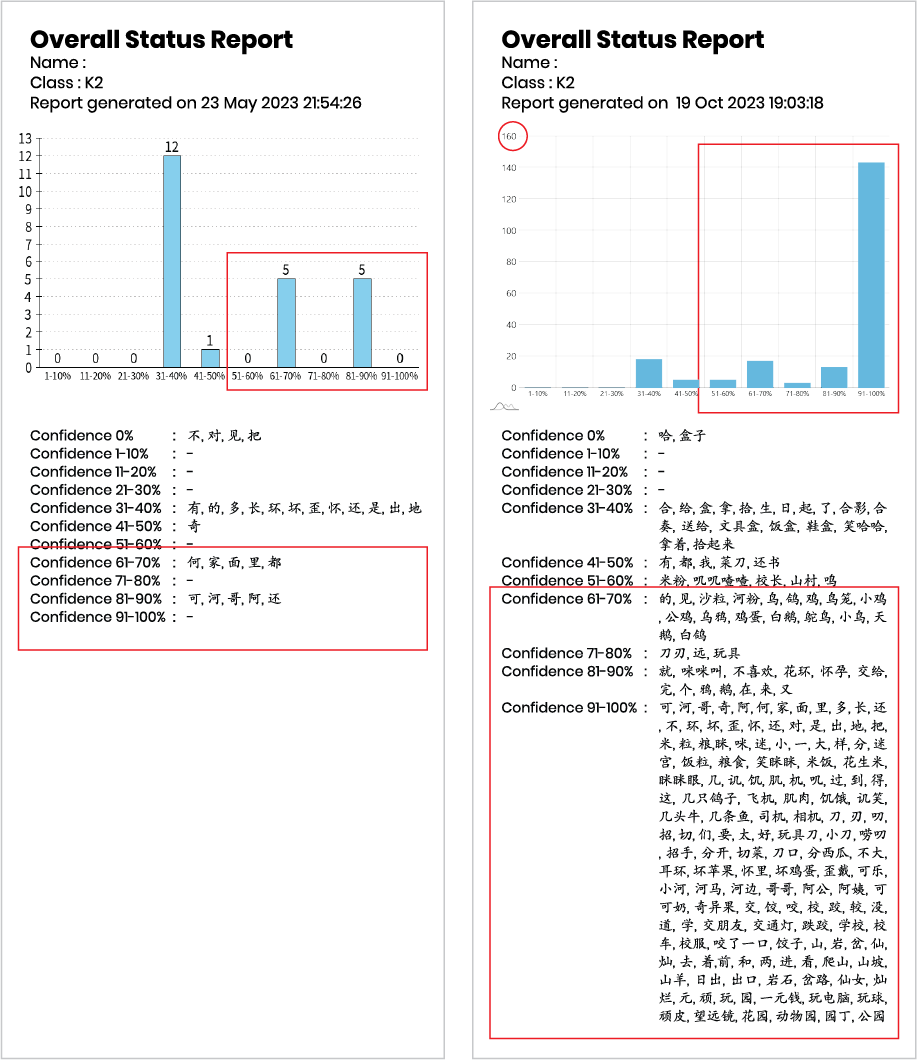
With AI Chinese, children will have a head start and can master more than 50% of the Singapore Primary 1 Chinese vocabulary while having fun. The advantage of AI Chinese is that parents and teachers know exactly what words each child knows.
English
All pre-schools teach phonics and reading. At Cambridge, we go beyond the basics. We want pre-schoolers to do more than be able to read. In our Literature Alive Curriculum, we cultivate a deep appreciation for the English language and ignite creativity and self-expression in children.
We introduce them to different genres of literature and nurture literary growth with enriching vocabulary and different language skills. As we explore beloved classics by famous authors, we encourage creative writing, thoughtful reflections, dynamic discussions and imaginative role-play.
As children progress through K2, we also expose them to a diverse range of poetic styles and provide opportunities for them to write poetry. This further immerses children in language exploration and creative expression. As they are exposed to these forms of literature, children get to explore new worlds, encounter extraordinary creatures and embark on thrilling adventures – all of which stimulate the imagination and foster a sense of wonder and curiosity.
Furthermore, instead of just reading stories written by others, our children are creating original stories using generative AI tools such as ChatGPT and DALL-E (a picture-generating AI) to produce stories complete with illustrations. Our children are leveraging the use of AI to unleash their creativity and develop their higher-order cognitive skills to prepare them for the future of school and work.
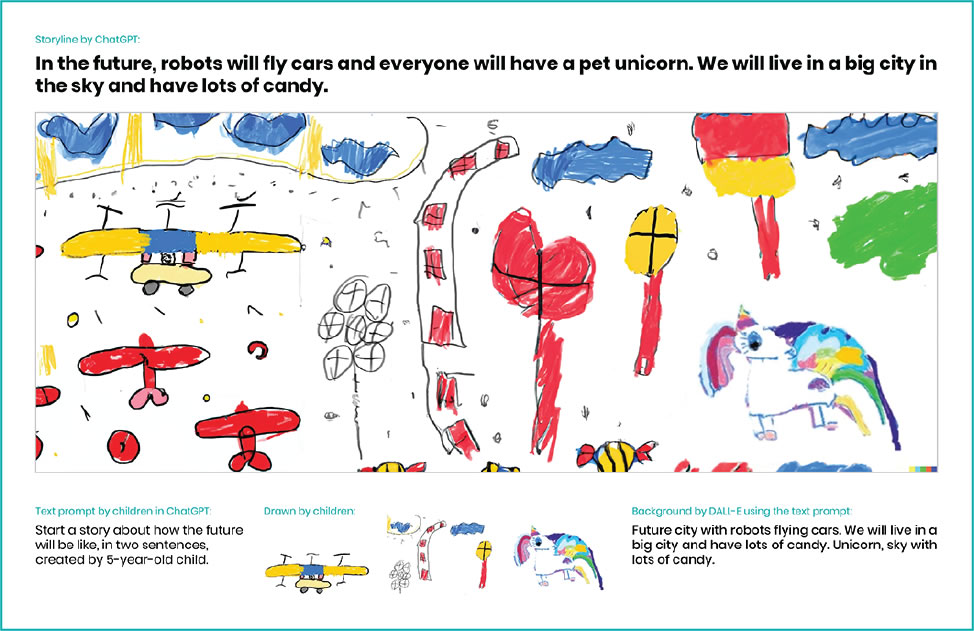
Children worked as a small group, using ChatGPT, to produce this story. They took turns writing the story on alternate pages. The storyline on page one was written by ChatGPT, using the text prompt listed in the lower left-hand corner. Based on the storyline, children drew some of the items such as flying cars, candies, and a unicorn. Children also used DALL-E to help them complete the illustration in the middle of the page with the prompt in the lower right-hand corner.
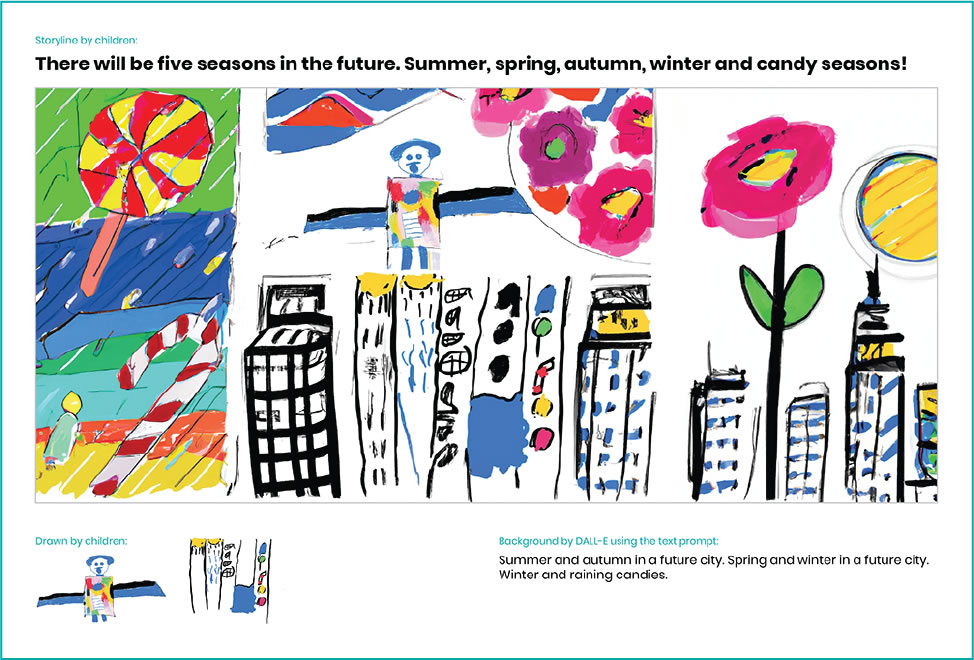
The story has many pages but I would like to highlight one of the pages written by children here.
“There will be five seasons in the future.
Summer, spring, autumn, winter and candy seasons!”
How creative!
In the process of doing these projects, we realised that it is difficult for young children to use ChatGPT because it requires typing and spelling. As a result, we built Edno.ai, our version of ChatGPT that incorporates interaction through speech. To ensure responses are age-appropriate, we also limit the age selection up to 7 years old.
Maths
At Cambridge, we also make maths practice fun with AI Maths, which serves as the children’s personal tutor, helping to pinpoint specific areas that require further practice and study. Games make studying even more fun.
Science
Besides English, Mother Tongue, and Maths, Science is the other core subject in primary school. Many children do not like science because they do not understand it. Often it is because it was not taught properly. All of us have experienced how a good teacher makes a subject come alive. Our Cambridge iSTEAM programme is designed to make science interesting with easy-to-understand concepts that ignite the children’s interests as well as lots of hands-on experiments to make science come alive. By making the first encounter of science fun, we lay the foundation for a positive primary school science experience. In the iSTEAM section in Chapter 4 later, you will see examples of how we accomplish this.
Direct School Admission (DSA)
Worried about the Primary School Leaving Examination (PSLE)? Do you know that your child can be admitted to a secondary school purely based on his or her talents? DSA allows P6 children to apply to some secondary schools before taking the PSLE. P6 children can apply for DSA-Sec based
on a wide range of talents, including:
- Science, mathematics and engineering (STEAM, Cambridge’s specialty)
- Sports and games
- Visual, literary and performing arts
- Debate and public speaking
- Languages and humanities
- Uniformed groups
- Leadership
Even though MOE schools’ Co-Curricular Activities (CCA) are supposed to be interest-based and develop your child’s talents, the reality is many popular CCAs have long waiting lists, and selection is now based on competency in the CCA area.
Starting your child young in Cambridge’s iSTEAM (innovation, Science, Technology, Engineering, Arts, Maths) curriculum may help to develop his or her interest early and give your child an edge in CCA selection and DSA later in science, mathematics, and engineering.
Furthermore, as we shall see later in the section on Multiple Intelligences, at Cambridge, we also provide opportunities to help your child discover other talents early so they can be nurtured. Keeping your options open is a good strategy for an unknown future. At Cambridge, we help to keep your child’s options open.
Reflections
- Do you realised that your child’s early exposure to their mother tongue could make learning Chinese much easier in primary school?
- Are you aware that AI technology can now provide personalised learning experiences tailored specifically for your child?
- Would you like to give your child the opportunity to secure direct admission to secondary schools, bypassing the traditional PSLE requirements?