
Growing up with two languages gives young children opportunities to communicate, express themselves and connect with people from different linguistic and cultural backgrounds.
As children learn English and Chinese, for example, they begin recognising that the same idea can be expressed in different ways. They also learn to adapt their communication depending on whom they are speaking to. Beyond developing proficiency in two languages, bilingual learning may support aspects of cognitive flexibility, language awareness and social understanding. However, these benefits depend on factors such as the child’s learning environment, language exposure and individual development.
In this article, we explore how bilingual learning can contribute to children’s early development and why a supportive bilingual environment matters during the pre-school years.
Supporting Executive Function
Cognitive Flexibility
Bilingual children regularly encounter situations that require them to choose between two languages. For example, they may use English during one classroom activity and Chinese during another, adjusting their communication to suit the situation.
Some studies suggest that bilingual children may demonstrate advantages in certain tasks involving cognitive flexibility, although the evidence is mixed. Regular exposure to two languages gives children opportunities to recognise different language patterns and adapt their communication to different situations.
Attention and Listening
Communicating in two languages gives children opportunities to listen carefully, recognise familiar words and follow conversations in different linguistic contexts. These experiences engage attention and language-processing skills, although research has not consistently established that bilingual children have better general concentration than monolingual children.
Working Memory and Language Processing
Understanding and communicating in two languages can involve remembering vocabulary, following conversations and keeping track of meaning across different contexts. These activities draw on working memory, although research has not established that bilingualism consistently improves general working-memory performance.
Problem Solving and Adaptability
Learning two languages introduces children to different ways of expressing ideas and communicating with others. When they encounter unfamiliar words or struggle to make themselves understood, they may experiment with alternative expressions, ask questions or use contextual clues.
These everyday experiences encourage flexibility and resourcefulness in communication. While bilingualism alone does not guarantee stronger general problem-solving abilities, a supportive learning environment can help children develop confidence in approaching unfamiliar situations.
Perspective-Taking and Social Understanding
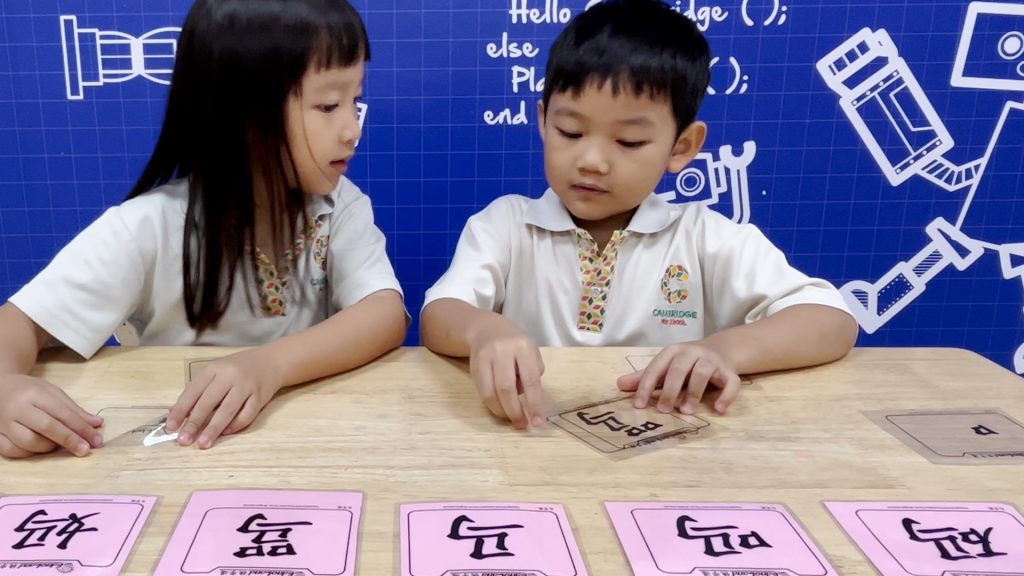
Children who use two languages often learn to consider which language another person understands. For example, a child may speak Mandarin with a grandparent and English with a classmate. These experiences encourage children to pay attention to other people’s knowledge and communication needs. This relates to perspective-taking, the ability to recognise that others may have different thoughts, experiences and beliefs.
Some research suggests that bilingual children may demonstrate advantages in certain perspective-taking tasks, although these findings do not mean that bilingual children are automatically more empathetic. Through meaningful interactions with people from different linguistic and cultural backgrounds, children have opportunities to develop social awareness and learn to communicate thoughtfully with others.
Cultural Connection
At Cambridge Pre-school, our Chinese Language and Literacy curriculum is complemented by our Chinese Cultural Appreciation Programme. Together, they help children develop their language skills while gaining a deeper appreciation of Chinese traditions, stories and cultural practices.
For children in multicultural families, this combination can also deepen their connection to relatives who speak Chinese at home.
Building Confidence in Communication
As children become more comfortable expressing themselves in English and Chinese, they gain more opportunities to participate in conversations, share their ideas and connect with different people.
At Cambridge Pre-school, our Literature Alive programme provides opportunities for children to listen, respond, share stories and express themselves in front of their peers, helping them become more confident communicators.
Long-Term Academic Readiness
Metalinguistic Awareness
Learning two languages can help children become more aware of how language works. For example, they may notice that English and Chinese use different sentence structures or that the same idea can be expressed differently in each language. This ability to recognise and reflect on language patterns is known as metalinguistic awareness. It can support literacy development as children become more familiar with the sounds, words and structures of different languages.
A longitudinal study of Malay-English bilingual primary school children in Singapore found that metalinguistic awareness predicted word reading in both languages.
Building a Foundation for Future Language Learning
The language awareness children develop through bilingual learning may also support their ability to learn additional languages later in life. Having experience with different sounds, sentence structures and ways of expressing meaning can make unfamiliar language patterns easier to recognise.
At Cambridge Pre-school, our English and Chinese Language and Literacy curricula provide opportunities for children to develop their language skills progressively, helping them prepare for the language demands of primary school.
Final Thoughts
Bilingual learning offers young children more than the ability to communicate in two languages. It provides opportunities to develop language awareness, connect with different cultures and express themselves confidently in a variety of situations.
These benefits are not limited to children growing up in bilingual households. With consistent exposure, meaningful interactions and age-appropriate learning experiences, children from different language backgrounds can progressively develop proficiency in English and Chinese.
At Cambridge Pre-school, we provide a supportive bilingual environment where children develop their English and Chinese skills through purposeful learning experiences.
Book a school tour today at any Cambridge Pre-school location to learn more about how our bilingual curriculum can support your child’s early development.