
Safe, clean, convenient. Most programmes for toddlers promise these basics, but the most important questions are often more subtle: such as, “will my child be gently stretched, emotionally secure, truly known?”
These questions matter because these programmes are often a child’s first experience of being part of a community outside the family. It is where they begin learning how to separate without fear, trust another adult, join a routine, express a need and recover after small frustrations. These early experiences shape a child’s confidence in the world.
This article is a parent’s guide to finding the best toddler programmes in Singapore. It will help you focus on what truly matters, from the learning environment and teaching approach to daily routines, teacher support and the signs that a programme is the right fit for your child.
Start With Your Child
Many parents begin with brochures, websites and school comparisons. The wiser place to begin is your child.
Some children enter a room ready to explore. Others take in the space quietly, observe from a distance and move forward only when they feel secure. A strong toddler programme understands that readiness looks different from child to child. It notices those cues and responds with patience, rather than expecting every child to adapt on the same timeline.
This is where your judgment as a parent matters. A lively, fast-paced environment may suit a child who is energised by movement and variety. A calm, thoughtfully structured setting may give another child the sense of safety needed to participate fully. The right choice comes from fit, not appearance. Real quality is found in a school’s ability to recognise the child before them and meet that child with sensitivity, intention and care.
Play Must Mean Something
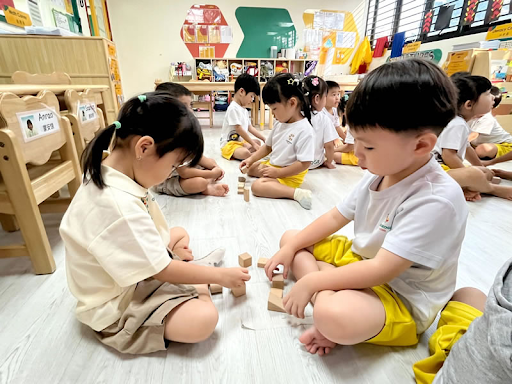
In early childhood, play is how learning happens. When children build with blocks, pour water, role-play, retell stories or negotiate over turns, they are developing language, attention, self-regulation, social judgement and early reasoning.
The value of a toddler programme lies in how purposefully play is designed. When a child builds a tower with blocks, they are learning to focus, solve problems, test ideas, and keep going when things do not work the first time. When they play with others, they are developing communication, turn-taking, and social awareness. These are the quiet foundations of early learning, built through moments that feel natural and engaging.
You can often sense that purpose in the room. In a thoughtful classroom, play feels open and enjoyable, yet it is shaped by clear developmental intention. As a child builds, a teacher may introduce words like “balance” or “steady,” guide them to notice what made the tower fall, and encourage them to try again. In one simple moment, vocabulary, persistence, memory, and coordination are all being developed. This is the power of purposeful play, it turns a child’s natural interest into meaningful growth.
Watch the Adults
Parents often inspect the environment first. In truth, the room can look beautiful and still feel wrong. What matters most is the quality of the adults.
Children respond to the emotional quality of the adults around them. Notice whether educators speak with steadiness, warmth and respect, and whether they pick up on signs of anxiety, withdrawal or overstimulation early. This kind of attentiveness influences how safe a child feels, and safety is what allows trust, regulation and participation to grow.
This is also where a school’s philosophy becomes visible in small, everyday moments. At Cambridge Pre-school, for example, the People Skills aspect of our curriculum is reflected in everyday classroom moments, but its aim is larger than teaching children to be sociable. When teachers guide children to take turns, listen, wait, and stay engaged during play, they are also nurturing executive function, character, and the ability to manage themselves in relation to others. That is what gives these small interactions real value; they help build the self-control, awareness, and confidence that support deeper readiness for learning.
Pay Attention to the Day’s Rhythm
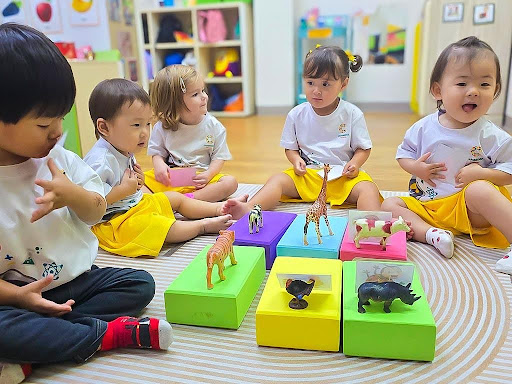
The daily rhythm of a pre-school toddler programme shows how well it understands young children. A strong centre structures the day so children feel secure, settled, and ready to engage.
Watch how the morning unfolds. Arrival, handover, routines, movement, and transitions reveal the centre’s real quality. When these are handled with care, children know what to expect, feel emotionally held, and participate more fully.
This is why daily rhythm matters when choosing the best centre for your toddler. Meals, hygiene, rest, movement, and parent communication are part of the learning experience. They affect how a child feels in school, and that feeling influences how confidently they grow.
Independence Is a Real Foundation
A strong programme for toddlers builds independence from the beginning because independence shapes how a child experiences school. Children who can manage simple routines with growing confidence often feel more settled, more secure, and more ready to engage.
Look closely at how a centre supports these everyday moments. Notice whether children are guided to put away their shoes, wash their hands, tidy materials, and express their needs clearly. These routines are part of the educational experience. They help children understand the flow of the day, trust their own ability to cope, and participate with greater ease.
This matters because early independence supports emotional stability as much as practical competence. A child who feels capable in small ways often enters the classroom with more confidence, joins activities with greater readiness, and develops a stronger sense of belonging.
Look Beneath the Output
Visible work can be reassuring, but parents choosing a programme for their toddlers need to pay attention to a deeper level of growth. The most important signs of a strong programme are often found in the child.
Look for growth in expression, attention, confidence, participation, and communication. These are the signs that a child is settling into learning in a meaningful way. A toddler programme with substance helps children become more engaged with their environment, more responsive to others, and more able to carry themselves with growing assurance.
This is one of the clearest ways to identify quality. The best environments are where daily experiences are shaping the child from within, helping them build the habits, language, and confidence that will carry into every later stage of learning.
Choose What Will Last
When parents search for the best programmes for their toddlers, they often want certainty. But what they really need is clarity.
Choose the place where your child is likely to feel secure, guided and steadily stretched. Choose the room where play has purpose, adults have judgement and independence is treated as part of real development. Choose the environment that is building lasting inner foundations.
At Cambridge Pre-school, we believe a strong beginning should shape the whole child, because what children experience in their earliest years becomes part of how they build confidence, respond to challenges, form relationships and approach learning itself. That is why meaningful early education must go beyond activity-filled days and visible output.
Looking for a programme for your toddler that takes early development seriously and thoughtfully? Book a school tour with us and see what that looks like in practice.